
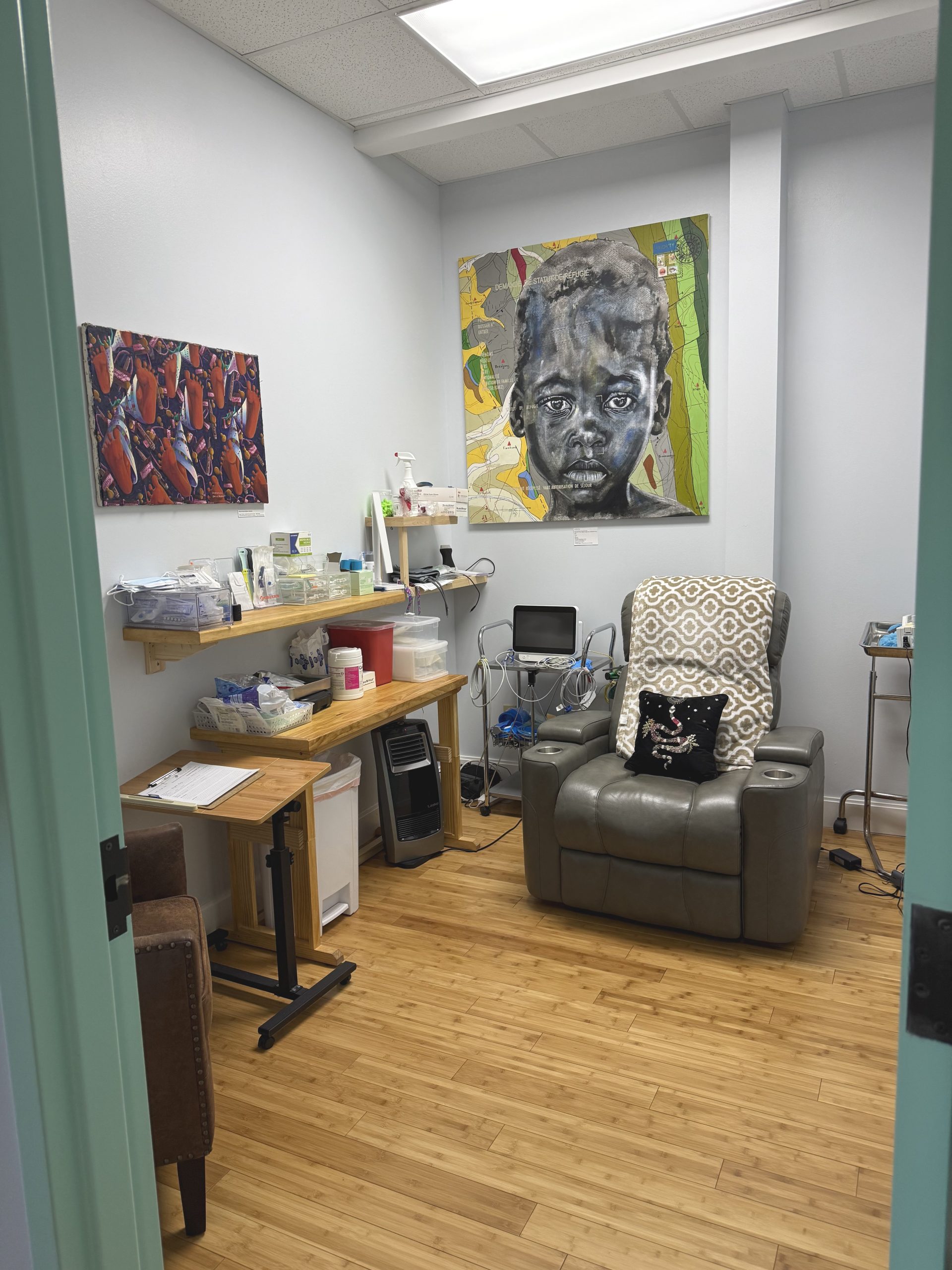
Why individualized psychiatric care matters in treating depression.
Depression can become a vicious cycle. Negative thoughts reinforce painful emotions, anxiety limits our ability to move forward, and hopelessness makes change seem increasingly difficult. We feel stuck.
For people living with treatment-resistant depression, ketamine therapy may offer an opportunity to interrupt that cycle.
Ketamine is not a cure for depression. Its potential value lies in creating a period of relief—a window in which the mind may become less overwhelmed, thinking becomes clearer, decisions feel easier, and even intrusive suicidal thoughts may temporarily diminish. This relief is not guaranteed and does not replace ongoing suicide-risk assessment or treatment.
Research suggests that ketamine influences neuroplasticity, the brain's ability to adapt and form new connections, although its relationship to lasting recovery is still being studied.
Our Philosophy: One Size Does NOT Fit All
At the Institute for Advanced Psychiatry in Fort Worth, Texas, we believe that treating depression involves more than administering a medication.
Ketamine therapy is provided within a psychiatric clinical setting, where each patient's history, diagnosis, previous treatments, medication sensitivities, and emotional experience are considered.
Some patients approach ketamine with hope. Others have experienced uncomfortable dissociation, anxiety, or a frightening sense of losing control during previous treatments.
We believe these experiences deserve attention, not dismissal.
No two patients share exactly the same story, and no two patients necessarily respond to ketamine in the same way. The dose, treatment approach, and number of infusions must be individualized according to each person's clinical needs, tolerability, and response.
Our goal is not to produce the most intense experience. Our goal is meaningful improvement with careful attention to safety, comfort, and individual needs.
Why the Psychiatric Setting Matters
Ketamine affects both the body and the mind.
At our practice, a qualified clinician remains physically present throughout the infusion, monitoring physiological responses and attending to the patient's experience.
But treatment does not end when the infusion ends.
We assess symptoms before and throughout the treatment course, follow up between treatments, and use clinical measurements to guide decisions.
Clinical research provides an important foundation, but it does not mean that every patient requires the same number of infusions.
Some patients improve earlier than others. Some require additional treatment, while others may not benefit.
We do not believe in continuing ketamine simply to complete a predetermined series. More treatment is not necessarily better treatment.
Our objective is to help patients achieve meaningful relief and, whenever possible, use that opportunity to support longer-term recovery through comprehensive psychiatric care.
Sometimes progress begins not with curing depression, but with interrupting the cycle long enough for something different to become possible.
Frequently Asked Questions About Ketamine Therapy
Is ketamine a cure for depression?
No. Ketamine may provide rapid relief from depressive symptoms, but the effects can be temporary. Our goal is to use that improvement as an opportunity to support broader psychiatric recovery.
How many ketamine infusions will I need?
Clinical studies commonly investigate courses of approximately six infusions, although protocols vary. We individualize treatment according to response, tolerability, and clinical need rather than automatically requiring a fixed number.
Do I need to experience dissociation for ketamine to work?
No. Profound dissociation is not an established requirement for antidepressant benefit. We pay particular attention to patients who find these sensations uncomfortable or frightening.
How is ketamine monitored during treatment?
A qualified clinician remains physically present throughout the infusion. We monitor vital signs, including blood pressure, heart rate, and oxygenation, while observing the patient's physical and psychological response.
Will I need maintenance ketamine infusions?
Not necessarily. Although maintenance ketamine may help some patients sustain improvement or delay relapse, evidence regarding the optimal duration and long-term benefits of repeated IV infusions remains limited.
At our practice, we do not assume that every patient needs maintenance treatment. We evaluate clinical improvement, the durability of response, and whether additional infusions offer meaningful benefit.
Our philosophy is to use ketamine when it is needed, not simply because it can be repeated.
Are there risks associated with long-term ketamine maintenance?
Yes. Repeated ketamine exposure raises important questions about long-term safety, particularly regarding memory, attention, cognition, and potential effects on the brain.
Studies involving chronic, high-dose recreational ketamine use have identified cognitive impairment and structural brain changes.
Long-term safety data of maintenance ketamine treatment remain incomplete. Other potential risks of repeated exposure include urinary complications and misuse or dependence.
For this reason, we favor the lowest clinically appropriate exposure, careful monitoring, and regular reassessment of whether continued treatment is justified.
Can ketamine help when antidepressants or TMS have not worked?
Ketamine may be considered for certain patients with treatment-resistant depression, including those who have not responded adequately to medications or other interventions. A comprehensive psychiatric evaluation is necessary to determine whether it is appropriate.
Selected Scientific Literature
1. Singh et al. (2016). A Double-Blind, Randomized, Placebo-Controlled, Dose-Frequency Study of Intravenous Ketamine in Patients With Treatment-Resistant Depression. American Journal of Psychiatry. Research involving UT Southwestern examining repeated ketamine infusions. PubMed
2. Phillips et al. (2019). Single, Repeated, and Maintenance Ketamine Infusions for Treatment-Resistant Depression. American Journal of Psychiatry. Examines antidepressant response, repeated infusions, and maintenance. PubMed
3. Duman & Aghajanian (2012). Synaptic Dysfunction in Depression: Potential Therapeutic Targets. Science. Reviews depression, ketamine, and synaptic plasticity. Full article
4. aan het Rot et al. (2010). Safety and Efficacy of Repeated-Dose Intravenous Ketamine for Treatment-Resistant Depression. Biological Psychiatry. Early research examining repeated infusions and durability of improvement. PubMed
5. Ballard & Zarate (2020). The Role of Dissociation in Ketamine's Antidepressant Effects. Nature Communications. Examines whether dissociation is necessary for antidepressant response. Full article
6. Smith-Apeldoorn et al. (2022). Maintenance Ketamine Treatment for Depression: A Systematic Review of Efficacy, Safety, and Tolerability. The Lancet Psychiatry. Reviews evidence and limitations of maintenance treatment. PubMed
7. Strous et al. (2022). Brain Changes Associated With Long-Term Ketamine Abuse: A Systematic Review. Frontiers in Neuroanatomy. Examines brain changes associated with prolonged recreational ketamine exposure. PubMed
8. Abbar et al. (2022). Ketamine for the Acute Treatment of Severe Suicidal Ideation: Double Blind, Randomised Placebo Controlled Trial. BMJ. Investigates short-term effects on suicidal ideation. Full article
Considering Ketamine Therapy in Fort Worth?
Learn more about our individualized approach to Ketamine Infusion Therapy at the Institute for Advanced Psychiatry, Fort Worth, Texas.
IV ketamine for depression is an off-label treatment. Benefits, risks, contraindications, and alternatives are reviewed during an individualized psychiatric evaluation.