
Deep TMS Therapy in Fort Worth
If you’re wondering whether TMS could be right for you, we can help you understand your options. We begin by listening to your concerns, reviewing your treatment history, and discussing what you hope will improve. Together, we consider whether TMS may fit your needs and goals.
At the Institute for Advanced Psychiatry in Fort Worth, Diana Ghelber, MD, is a certified provider of BrainsWay® Deep TMS. She offers this noninvasive treatment for adults and, for major depressive disorder, adolescents ages 15–21 when clinically appropriate. Whenever possible, we coordinate care with your existing psychiatrist, therapist, or primary-care clinician.
View current fees and booking information
Questions about TMS before an evaluation?
You can request a free informational consultation with our practice coordinator to discuss the process and practical questions. A clinician determines whether treatment is appropriate for you.
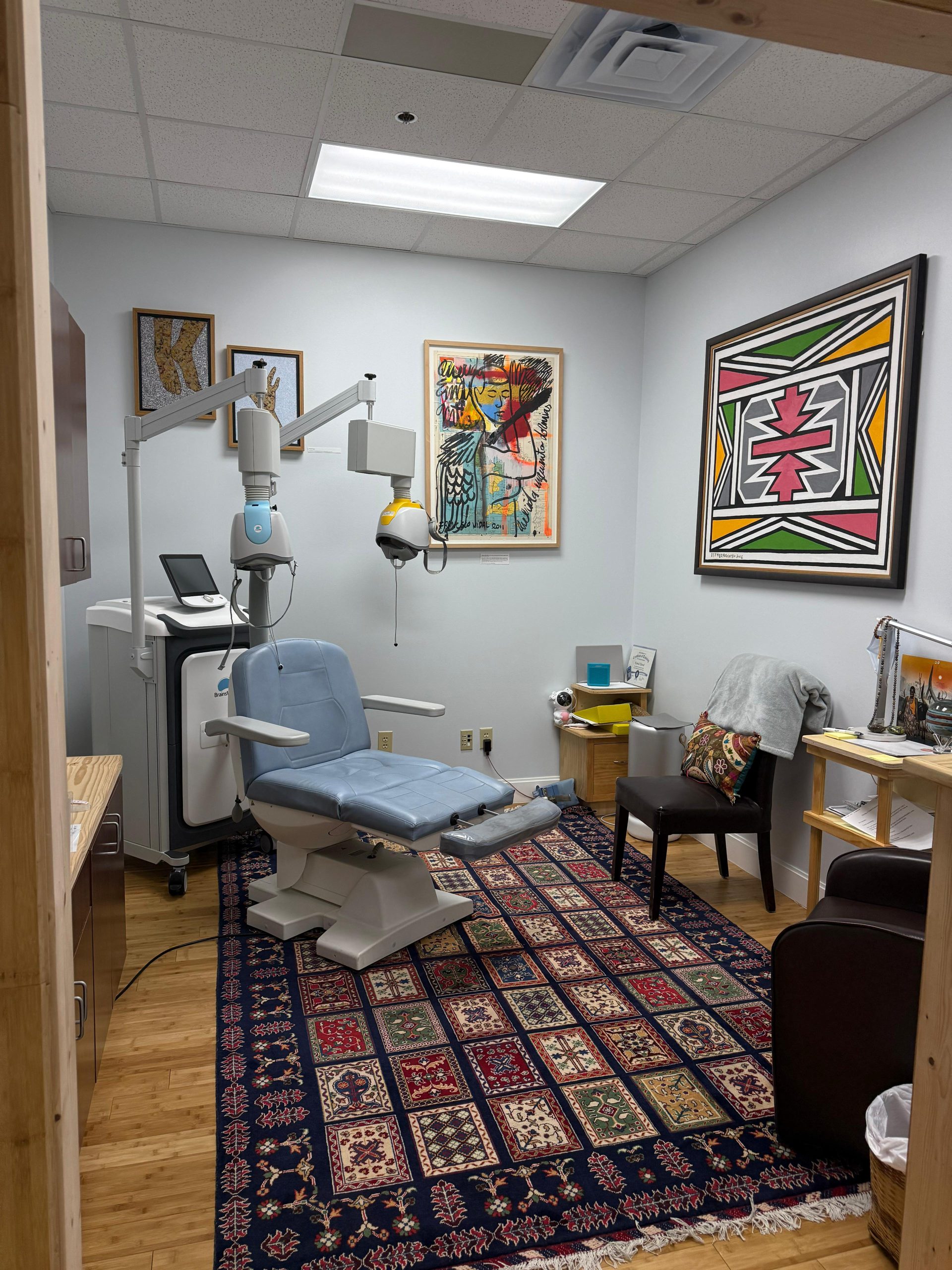
What is TMS therapy?
Transcranial magnetic stimulation (TMS) is a noninvasive procedure that uses pulsed magnetic fields to stimulate specific areas of the brain involved in mood, thinking, and behavior. The magnetic fields used in TMS are similar in strength to those used in a standard MRI scan.
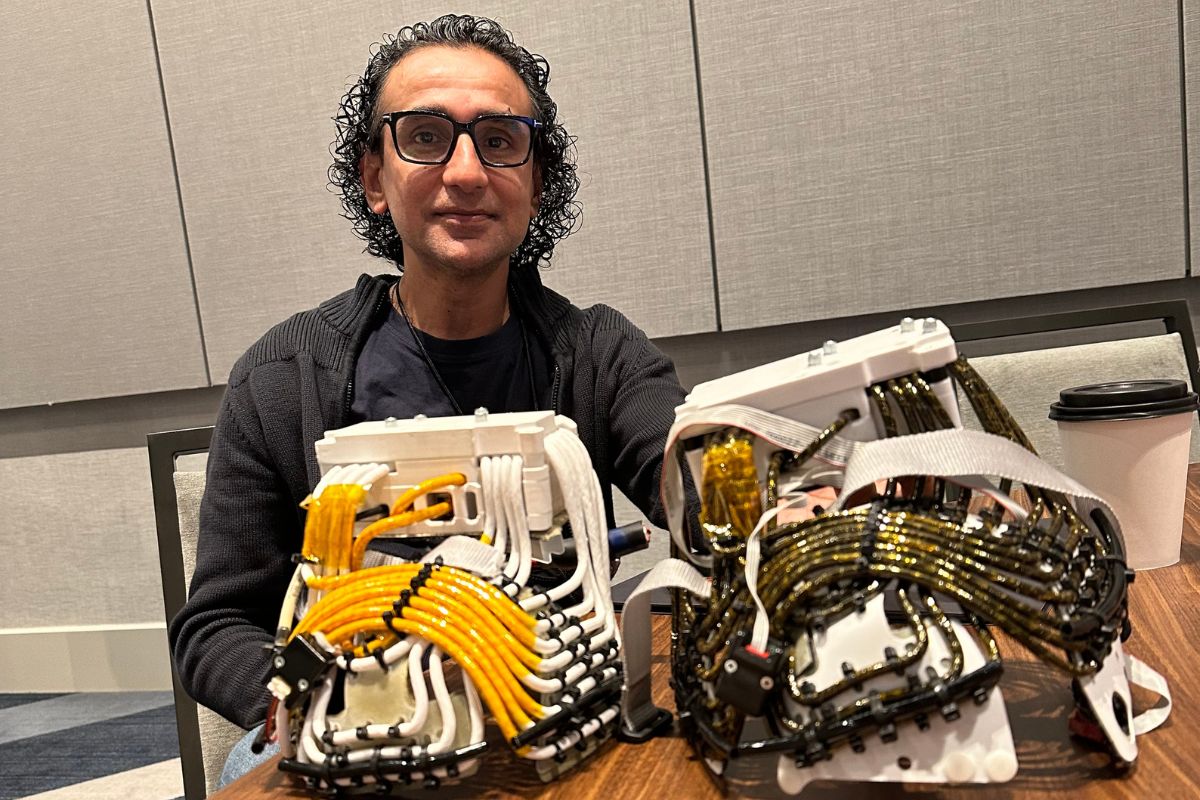
How does TMS therapy work?
Dr. Ghelber uses the FDA‑cleared BrainsWay Deep TMS system. During treatment, a cushioned helmet delivers focused magnetic pulses through a specialized coil placed on your head, targeting key brain areas that help regulate mood.
TMS stimulates brain circuits involved in mood regulation and changes patterns of neural activity.
Researchers continue to study how changes in neural activity and neuroplasticity—the brain’s ability to adapt and form connections—contribute to its therapeutic effects.
Standard and Accelerated TMS Protocols
TMS is not a one-size-fits-all treatment. In addition to standard treatment schedules, we offer accelerated TMS protocols for selected patients. The choice of protocol is individualized based on diagnosis, symptoms, previous treatment response, medical history, treatment goals, and practical considerations.
Accelerated protocols use a more intensive treatment schedule and may allow treatment to be delivered over fewer treatment days. Not every protocol is appropriate for every patient.
Deep TMS Treatments We Offer
At the Institute for Advanced Psychiatry, we use BrainsWay Deep TMS with different stimulation coils and protocols depending on the condition being treated and the individual patient’s clinical presentation.
Depression
We offer Deep TMS for major depressive disorder using both the H1 and H7 coils. These coils stimulate somewhat different brain networks, providing additional options when developing an individualized treatment approach.
BrainsWay Deep TMS is FDA-cleared for the treatment of depressive episodes in adults with major depressive disorder who have not achieved satisfactory improvement from antidepressant medication during the current episode. It is also FDA-cleared for decreasing anxiety symptoms in adults with major depressive disorder who have comorbid anxiety symptoms.
Deep TMS is also FDA-cleared as an adjunctive treatment for major depressive disorder in adolescent patients ages 15–21.
When might TMS be considered?
TMS is often considered after an antidepressant medication has not provided satisfactory improvement. However, the decision about when to consider TMS is individualized and does not need to be based only on the number of medications a person has tried. If depression has persisted despite previous treatment, learn more about our approach to treatment-resistant depression.
TMS may deserve particular consideration for people who have had difficulty tolerating antidepressant medications or who prefer to minimize additional medication when clinically appropriate. It may also be worth discussing for people with medical conditions or complex medication regimens when adding another medication raises concerns about side effects, drug interactions, or overall medication burden.
TMS is a noninvasive treatment and can be used alongside medication or, in appropriate circumstances, without an antidepressant. Whether it is an appropriate option depends on the diagnosis, previous treatments, medical history, current medications, and individual treatment goals.
OCD
We offer Deep TMS with the H7 coil for adults with obsessive-compulsive disorder (OCD).
OCD treatment includes brief, individualized symptom provocation before stimulation. The purpose is to activate the relevant OCD circuitry immediately before TMS. This approach is related to the principle of engaging symptoms during behavioral treatment, although it is not the same as exposure and response prevention (ERP).
Deep TMS can be incorporated into a broader OCD treatment plan that may include medication and ERP when clinically appropriate.
Smoking Cessation
We also use TMS as part of treatment for smoking cessation in selected patients.
Research on TMS for tobacco use disorder has examined stimulation of brain networks involved in craving, reward, and behavioral control. Some treatment protocols briefly expose patients to smoking-related cues before stimulation so that craving-related circuitry is activated during treatment.
This has conceptual similarities to the symptom-provocation approach used with TMS for OCD. At our practice, use of the H7 coil for smoking cessation is off-label and should be distinguished from FDA-cleared smoking-cessation TMS protocols using other stimulation coils.
Treatment recommendations are individualized following psychiatric evaluation and discussion of potential benefits and risks, established treatment options, and available alternatives.
Off‑label / investigational indications
TMS is being studied or used in selected circumstances for additional psychiatric and neurologic conditions.
Off‑label disclaimer
Off‑label TMS uses are not FDA-cleared for these conditions, may have more limited evidence, and might not be covered by insurance. They are only considered after an individualized evaluation and a careful discussion of potential benefits, risks, alternatives, and coverage.
What should I expect from TMS therapy?
First, Dr. Ghelber completes a comprehensive intake, including a detailed psychiatric evaluation, review of your medical history and medications, and a review of systems, to confirm that TMS is safe and appropriate for you. Your TMS course is individualized based on the condition being treated, symptom severity, and your treatment goals.
Sessions take place in‑office at the Institute for Advanced Psychiatry and are scheduled with our clinical coordinator so they fit into your daily routine. The goal is for TMS to become a predictable, manageable part of your week without derailing work, school, or family responsibilities.
During each session, you sit in a comfortable chair while a cushioned helmet containing the treatment coil is placed on your head. The length and frequency of sessions vary from person to person and depend on the protocol chosen (conventional or theta‑burst), the condition being treated, and your availability. Your plan is designed to balance effectiveness with minimal disruption to your schedule.
During treatment, patients may feel tapping sensations or scalp discomfort; headache can occur during or after a session. Dr. Ghelber can adjust the settings and discuss strategies to improve comfort.
Seizure is a rare but serious risk. The pretreatment evaluation includes review of relevant medical history, seizure risk, medications, and implanted or metallic devices when applicable.
To learn more about TMS therapy or to schedule an evaluation, call the Institute for Advanced Psychiatry today or request an appointment online.
Research from our practice
Dr. Diana Ghelber and colleagues have shared clinical research through conference presentations and journal publications.
- Deep TMS with and without ketamine infusions in treatment-resistant depression: real-life results — Diana Ghelber and Kumud Khanal, Brain Stimulation, 2018.
- Increasing Number of dTMS Sessions Improves Response Rate in Major Depression — conference abstract, Transcranial Magnetic Stimulation, 2024.
These observational findings inform clinical discussion; they do not establish that combining treatments is superior or predict an individual patient’s outcome. For information about a different treatment option, read about IV ketamine therapy.
Request an Appointment
Note: This form is for general inquiries only. For urgent mental health needs, please call us directly at 817-659-7344 or call 988 (Suicide & Crisis Lifeline).
By submitting, you agree to our Privacy Policy. We typically respond within 1 business day.