
PTSD Treatment in Fort Worth
Post-traumatic stress disorder (PTSD) can affect far more than memories of a traumatic event. It can change sleep, mood, concentration, relationships, work, physical health, and the way a person responds to everyday situations.
At the Institute for Advanced Psychiatry in Fort Worth, we treat PTSD as a disorder involving both symptoms and the brain networks involved in stress and emotional regulation.
Our approach may include medication, psychotherapy, treatment of co-occurring psychiatric and medical conditions, and newer approaches to neuromodulation and neurofeedback. One of the distinctive treatments available in our practice is PRISM neurofeedback for PTSD.
PRISM Neurofeedback for PTSD

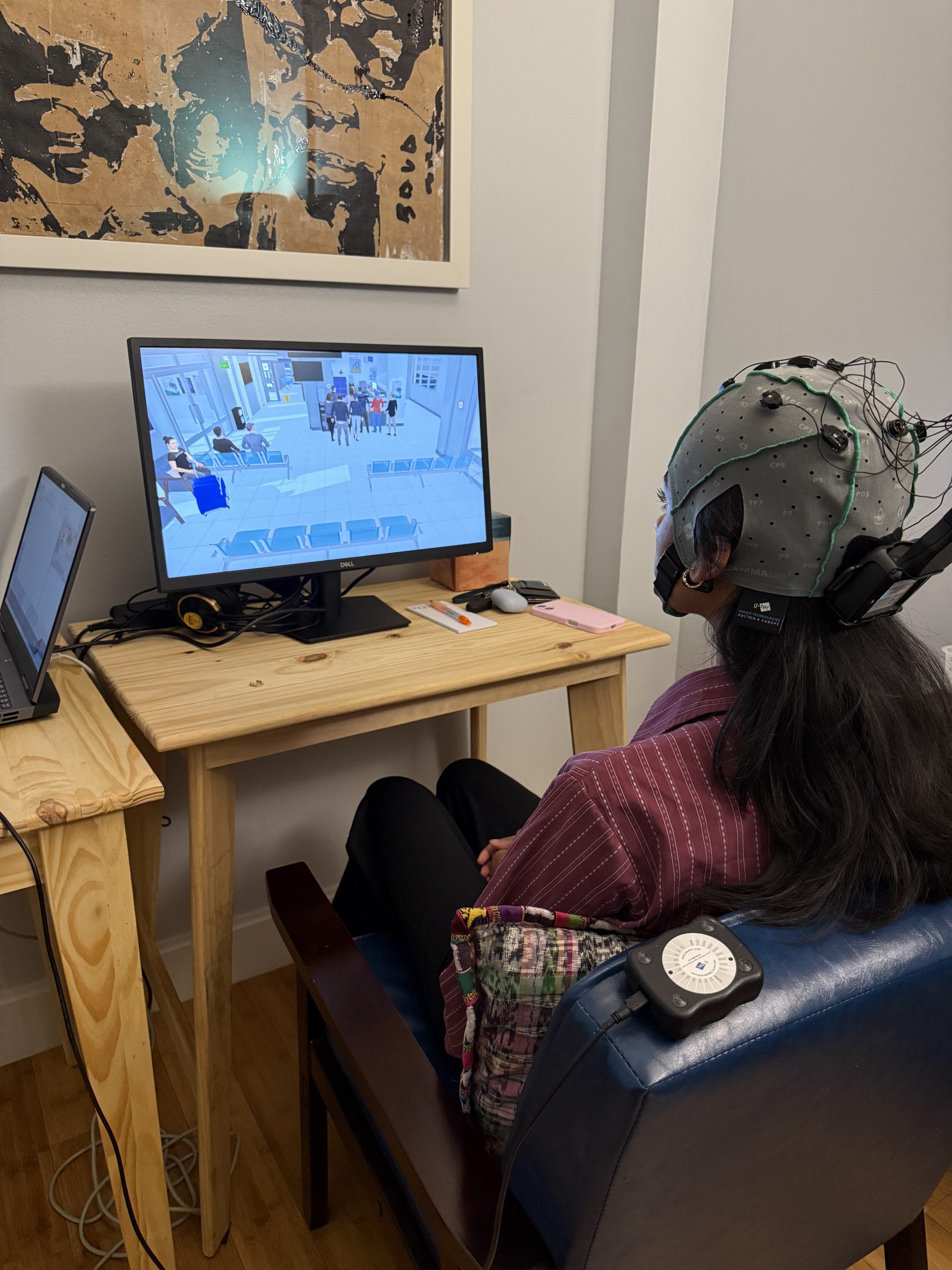
PRISM is an FDA-cleared adjunctive neurofeedback treatment for PTSD. It uses EEG-based neurofeedback to help patients learn to regulate a brain-activity pattern derived from activity of the amygdala, a region centrally involved in the brain's response to threat and emotional stress.
During treatment, the patient wears an EEG headset and receives real-time visual and auditory feedback while experimenting with mental strategies to regulate the targeted brain activity.
Importantly, PRISM training does not require patients to recount their traumatic experiences during the treatment sessions. The focus is on learning self-regulation rather than repeatedly describing what happened.
A standard course consists of 15 neurofeedback sessions, generally delivered twice weekly over approximately eight weeks.
What Does the Evidence Show?
In the multicenter study supporting PRISM, 66.7% of participants achieved clinically meaningful improvement on the clinician-administered PTSD scale at three-month follow-up. Average PTSD severity continued to improve after treatment ended.
We have also studied PRISM in patients treated at the Institute for Advanced Psychiatry.
In our published 2026 real-world case series of 28 consecutive patients with PTSD, 21 completed treatment. Among completers, the average reduction in PCL-5 PTSD severity was 37 points, and 90.5% achieved a clinically significant improvement of at least 10 points. Because this was a retrospective clinical case series rather than a randomized controlled trial, these results should be interpreted as real-world evidence rather than as a direct comparison with other treatments.
Our additional published experience in patients with PTSD complicated by severe traumatic brain injury demonstrated substantial symptom and functional improvement in two patients, including return to driving, social reintegration, return to work, and sustained improvement during follow-up.
PTSD Can Affect the Whole Person
PTSD may include intrusive memories or nightmares, avoidance, hypervigilance, exaggerated startle, irritability, emotional numbing, guilt, difficulty concentrating, and persistent changes in mood and sleep.
Its impact can extend much further. People may withdraw from relationships, avoid driving or public places, have difficulty working, become increasingly isolated, or organize much of their lives around avoiding situations that feel unsafe.
PTSD also frequently occurs alongside depression, anxiety, panic symptoms, insomnia, substance use, chronic pain, and traumatic brain injury.
These conditions matter. Treating PTSD while leaving severe depression, insomnia, addiction, pain, or another major condition untreated may leave a patient substantially impaired.
Treating PTSD: More Than One Approach
Established PTSD treatments include evidence-based psychotherapies and medication.
Trauma-focused psychotherapies such as cognitive processing therapy (CPT), prolonged exposure (PE), and EMDR have the strongest psychotherapy evidence. Sertraline and paroxetine are FDA-approved medications for PTSD, and other medications may be considered according to the individual clinical situation.
Not every patient responds completely to the same treatment, and some have difficulty tolerating or completing a particular approach. Treatment therefore needs to consider previous response, preferences, comorbidities, functional impairment, and the patient's goals.
PRISM offers a different approach by using brain-based self-regulation rather than requiring trauma narration during the neurofeedback sessions.
It is not necessary to choose one philosophy of treatment for every patient. Psychotherapy, medication, neurofeedback, and treatment of co-occurring conditions may have complementary roles.
Improvement Is Important. Recovery Is the Goal.
A reduction in PTSD symptoms is important, but partial improvement is not always enough.
Residual hypervigilance, nightmares, depression, anxiety, avoidance, sleep disturbance, substance use, or chronic pain may continue to interfere with relationships, work, health, and quality of life.
For this reason, we reassess what remains after treatment begins and address important co-occurring conditions rather than stopping simply because a symptom score has improved.
Our goal, whenever possible, is the greatest achievable symptom resolution, restoration of function, and sustained recovery.
Emerging Interventional Approaches
TMS and PTSD
Transcranial magnetic stimulation (TMS) is being studied for PTSD as a noninvasive method of influencing brain networks involved in emotional regulation.
Research is encouraging but remains heterogeneous, and TMS should currently be considered an emerging/off-label application for PTSD, not equivalent to an FDA-cleared PTSD indication.
For patients who have both PTSD and major depression, TMS may also be considered for the depressive disorder when clinically appropriate.
Ketamine and PTSD
Ketamine has also been studied for PTSD, but evidence remains developing and it is not FDA-approved specifically for PTSD.
Its role may be particularly relevant when significant treatment-resistant depression occurs alongside PTSD. We evaluate which syndrome is being targeted rather than assuming that improvement in depression will necessarily resolve PTSD.
An Individualized PTSD Treatment Plan
PTSD does not look the same in every patient.
We consider symptom severity, daily functioning, sleep, depression and anxiety, substance use, chronic pain, traumatic brain injury and other medical or psychiatric conditions, previous treatment, and what the patient wants to regain.
For some patients, psychotherapy or medication may be the appropriate starting point. For others, PRISM neurofeedback may provide an additional brain-based approach to treatment. Interventional options may also be considered when clinically appropriate.
The goal is not simply to treat a diagnosis. It is to help the patient regain function, relationships, independence, and quality of life.
Request an Appointment
Note: This form is for general inquiries only. For urgent mental health needs, please call us directly at 817-659-7344 or call 988 (Suicide & Crisis Lifeline).
By submitting, you agree to our Privacy Policy. We typically respond within 1 business day.