
IV Ketamine Therapy in Fort Worth
Psychiatrist Diana Ghelber, MD, offers IV ketamine therapy for carefully selected adults with treatment-resistant depression at the Institute for Advanced Psychiatry in Fort Worth, Texas.
Ketamine can produce rapid improvement in depressive symptoms for some patients, including people who have not responded adequately to conventional antidepressant treatments. Response varies, and improvement after an infusion may not be sustained without additional treatment. Ketamine is considered as part of an individualized treatment plan rather than as a replacement for comprehensive psychiatric care.
IV ketamine for depression is an off-label treatment. Ketamine is FDA-approved as an anesthetic, but it is not FDA-approved for the treatment of depression or other psychiatric disorders.
Your clinician will review your symptoms, medical and psychiatric history, medications, previous treatments, and other relevant factors before determining whether IV ketamine is an appropriate option.
How to get started: Request a consultation using the button below, or call 817-659-7344. Your clinician will review your symptoms and treatment history and discuss appropriate options.
Fees
How ketamine may help
IV ketamine has been studied as a rapid-acting treatment for depression, particularly treatment-resistant depression. Some patients experience improvement relatively quickly, sometimes within the first day after an infusion. Not everyone responds, and the duration of improvement varies.
When repeated or maintenance treatment is considered, the schedule is individualized according to clinical response, tolerability, and the broader treatment plan.
Ketamine may be used alongside other psychiatric treatment when appropriate. Patients should continue ongoing psychiatric and medical care as recommended by their treating clinicians.
Learn more about treatment-resistant depression.
Realistic expectations
Ketamine can produce relatively rapid improvement in depressive symptoms for some patients, but it does not work for everyone. The degree and duration of improvement vary, and some patients may need additional or ongoing treatment to maintain progress.
Our goal is not simply to determine whether you are a candidate for ketamine. During your evaluation, we discuss realistic expectations and compare the treatment approaches that may be appropriate for you. Depending on your symptoms, previous treatments, medical history, preferences, and treatment goals, this may include IV ketamine, antidepressant or other psychiatric medications, Deep TMS, psychotherapy, or a combination of approaches.
These treatments differ in how they work, how quickly improvement may occur, potential side effects, treatment burden, and the durability of benefit. We review these differences with you so that the treatment plan reflects your individual clinical situation rather than assuming that one treatment is best for everyone.
Ketamine is therefore considered as one option within comprehensive psychiatric care—not as a guaranteed response or a stand-alone cure.
What to expect on treatment day
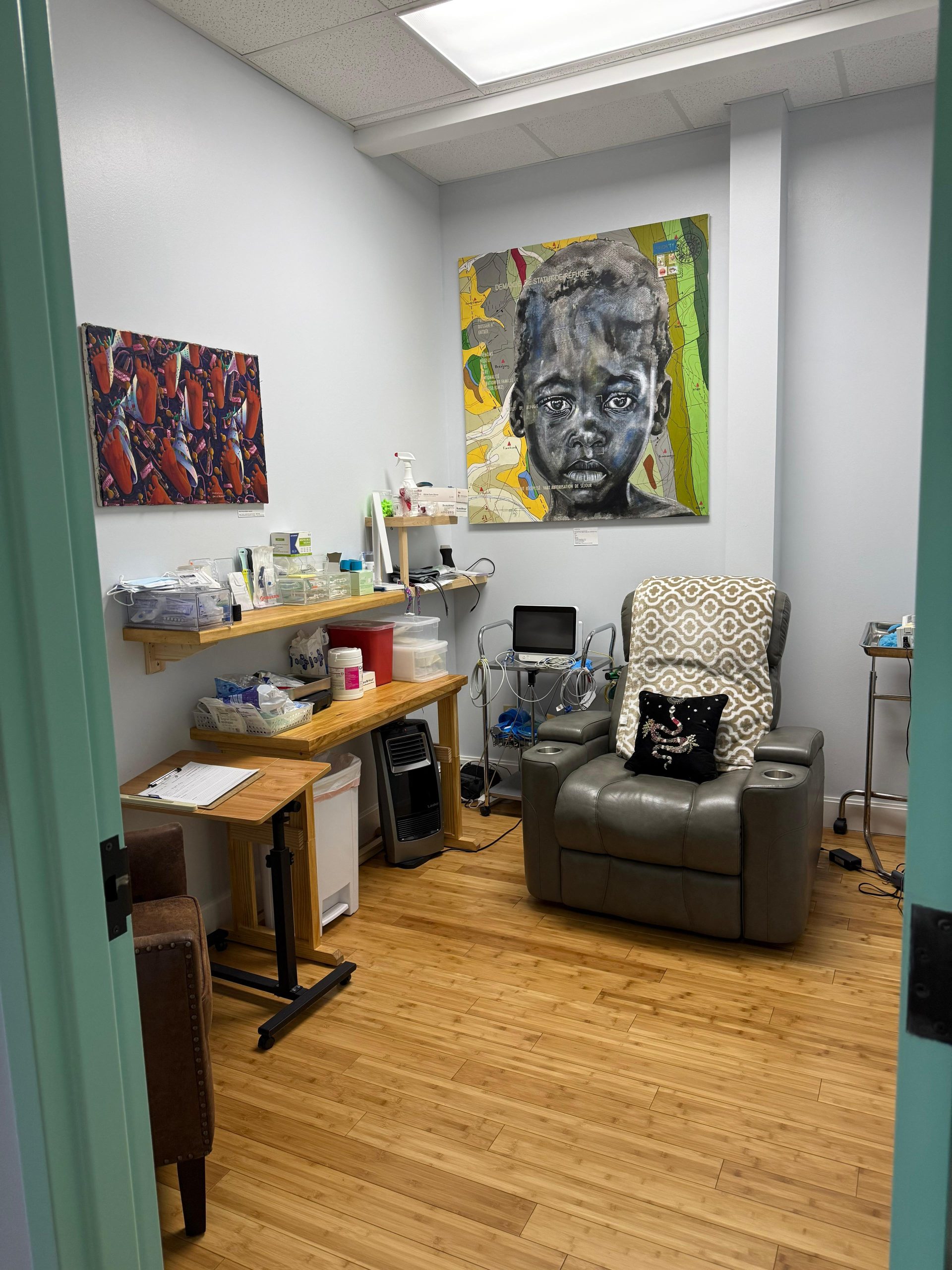
Ketamine infusions are performed in our Fort Worth office.
A typical infusion lasts approximately 40 minutes, followed by a monitored recovery period. During treatment and recovery, patients are observed for potential changes in blood pressure, heart rate, level of alertness, perception, and other adverse effects.
You must have a responsible adult age 18 or older bring you to the appointment, remain onsite during your visit, and drive you home. You cannot be discharged alone or to a rideshare service, taxi, or a driver who did not remain onsite.
If these safety requirements are not met, treatment may be canceled in accordance with office policy.
Side effects, risks, and safety
Ketamine can cause temporary side effects during or after an infusion. These may include dizziness, nausea, increased blood pressure or heart rate, sedation, changes in perception or sense of reality (dissociation), vivid dreams, confusion, or other changes in awareness.
Ketamine can also affect breathing, particularly in certain clinical circumstances or when combined with other central nervous system depressants. Patients are monitored during treatment and recovery, and relevant medications, medical conditions, and substance use are reviewed as part of the evaluation.
Ketamine is a controlled substance and has potential for misuse and dependence. At our practice, IV ketamine is administered only as a supervised, time-limited, in-office treatment. We do not provide ketamine for at-home use.
Ketamine is not appropriate for everyone. Particular caution is required when an increase in blood pressure could pose a serious medical risk. Pregnancy, possible pregnancy, breastfeeding, cardiovascular conditions, substance-use history, and other medical or psychiatric factors should be discussed with your clinician before treatment.
After your infusion
Do not drive or operate machinery for at least 24 hours after your ketamine infusion.
You will need a responsible adult to drive you home. Follow the post-treatment instructions provided by the clinic, including restrictions concerning alcohol, recreational drugs, sedating medications, and activities requiring unimpaired judgment or coordination.
If you develop concerning symptoms after leaving the clinic, contact our office. In an emergency, seek emergency medical care first and then notify our office.
Informed, collaborative care
Before beginning IV ketamine therapy, we discuss the potential benefits, limitations, risks, alternatives, and the off-label nature of treatment. You will have an opportunity to ask questions before providing informed consent.
Ketamine is one of several interventional approaches available at the Institute for Advanced Psychiatry. Depending on your diagnosis, treatment history, preferences, and clinical needs, other options may include medication management, psychotherapy, or Deep TMS.
Learn about Deep TMS therapy in Fort Worth.
Research from our practice
Dr. Diana Ghelber and colleagues have shared clinical observations on Deep TMS and IV ketamine for treatment-resistant depression. These observations inform clinical discussion but do not predict an individual patient’s outcome.
Published abstract and associated poster
Brainsway™ dTMS (TMS) and Brainsway™ dTMS with Ketamine Infusions (TMSK) in Treatment-Resistant Depression (TRD); Real life results — Diana Ghelber and Kumud Khanal. Published abstract, Brain Stimulation. 2018;11(6):e12. View the published abstract.
This small observational study compared Deep TMS with and without ketamine infusions. It did not establish that adding ketamine was superior to Deep TMS alone. The associated poster presents the same work and is not a separate study.
Presentations and interviews
- 2015: How and Why to Set Up a Ketamine Clinic with a Psychiatrist and an Anesthesiologist? — Diana Ghelber; workshop at the 10th International Congress of the International Neuropsychiatric Association, Jerusalem, Israel.
- 2017: Bring the Conversation to Light — Diana Ghelber; Jordan Elizabeth Harris Foundation annual luncheon. Watch the presentation.
- 2020: A Conversation with Psychiatrist Diana Ghelber, M.D. — Jordan Elizabeth Harris Foundation. Read the interview.
These educational presentations and interviews are separate from the research study.
Request an Appointment
Note: This form is for general inquiries only. For urgent mental health needs, please call us directly at 817-659-7344 or call 988 (Suicide & Crisis Lifeline).
By submitting, you agree to our Privacy Policy. We typically respond within 1 business day.